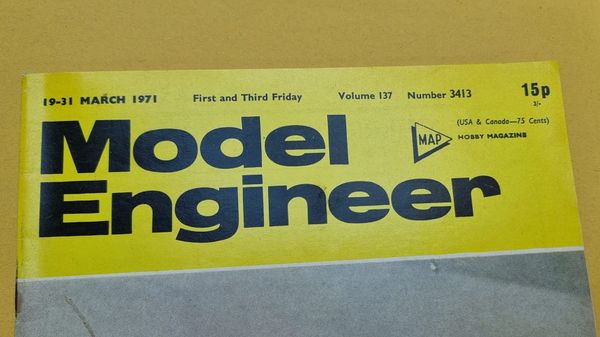
Build Your Own
1971 Model Engineer - Build Your Own Teasmade
Article by S Orme on building a tea-maker, published in Model Engineer, March 1971.

Build Your Own
Article by S Orme on building a tea-maker, published in Model Engineer, March 1971.
1970s
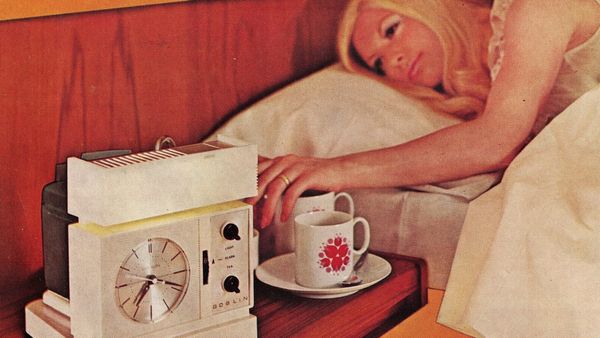
The Goblin 834 teasmade.
1970s
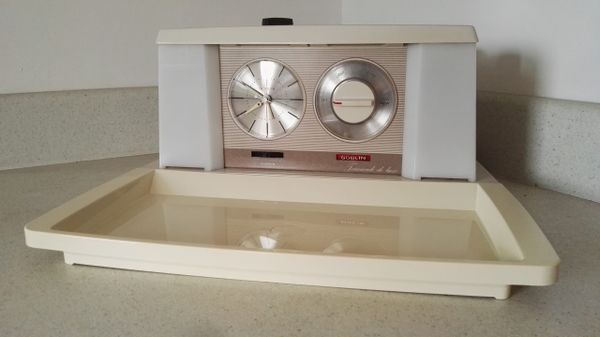
The first 835 production model came off the line in June 1970.
1970s
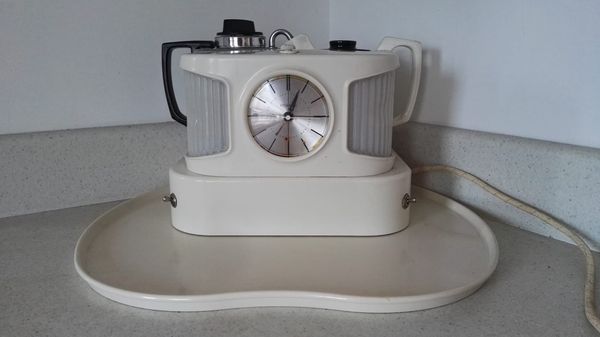
The Goblin Teasmade model D25d was launched in 1970. The D25d was also available in a Queen Anne version. It featured a modern brushed stainless steel clock face. The kettle and teapot were no longer set diagonally. The new style kettle and teapot, the same as those on the 834,

1970s
The Goblin D25d Queen Anne was manufactured between 1970 and 1971. No illustration available as yet.
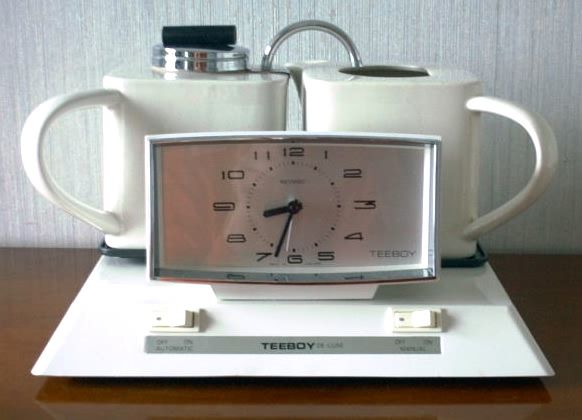
1970s
This teasmade was made by Teeboy Engineering in the 1970’s (exact date not known). It is mechanically and structurally very simple (the base is a thin sheet of hardboard!) but it works well and has a simplistic appeal. It has a square kettle and teapot, with the handles and
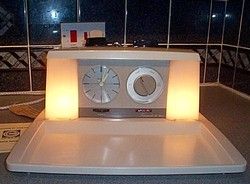
1970s
The Goblin Teasmade 835b probably appeared in 1971. The red neon light cover on this model is a dummy with no bulbholder or wiring. This is a hangover from the 835, which had a light which illuminated when the alarm sounded, now discontinued. This model had a variable volume buzzer.
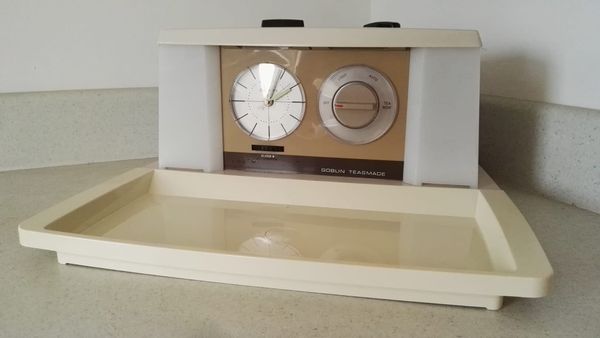
1970s
Goblin Teasmade 835c, 1971
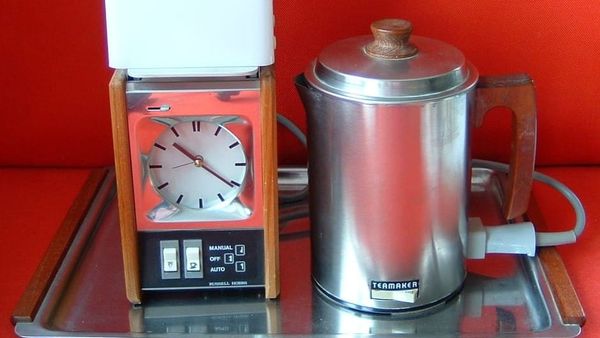
1970s
The Russell Hobbs 6501 Automatic Electric Teamaker teasmade set

1970s
In 1972 Goblin looked into the idea of manufacturing a Coffeesmade. In February 1972 a Development meeting decided that Sales should conduct a market research survey to investigate coffee drinking habits in the UK and Europe before coming to any conclusions and commencing design work. In March 1972 a design
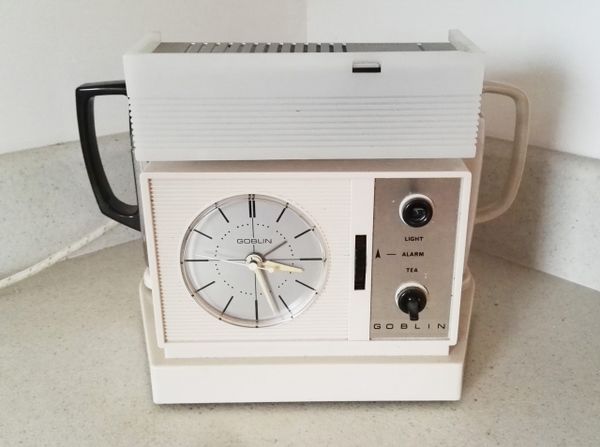
1970s
The Goblin 834b was introduced in 1972. It featured a teapot detector, which had been requested by the hotel trade to prevent accidents. According to Goblin Leatherhead records the 834b ceased production in August 1972 when it was replaced by the 844 with the new rotary dial. Website regular Pete
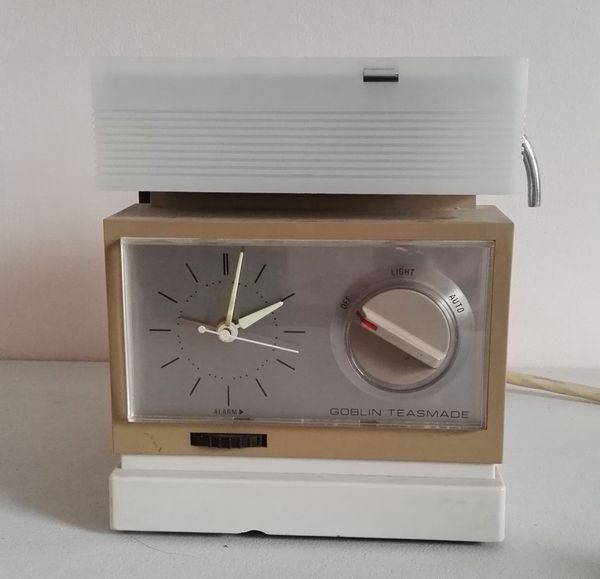
1970s
Production of the 843 began in Northern Ireland in August 1972. It had a new style of housing in beige with the clock face now printed on a polished aluminium fascia. The control was now achieved by a circular switch on a clear perspex cover. It continued to use the
This site contains affiliate links.
As an affiliate I earn a small commission from qualifying purchases.